What 29 Years in Real Estate Has Taught Me About Market Cycles
After nearly three decades in real estate, I’ve seen just about everything—booms that felt unstoppable, downturns that made headlines, and quiet periods where the market simply caught its breath. One thing I can tell you with certainty: real estate is cyclical, but it’s never predictable in the way people hope.
If you’re trying to time the market perfectly, you’re playing a game that even seasoned professionals don’t win consistently. What you can do is understand the patterns—and make smarter decisions because of them.
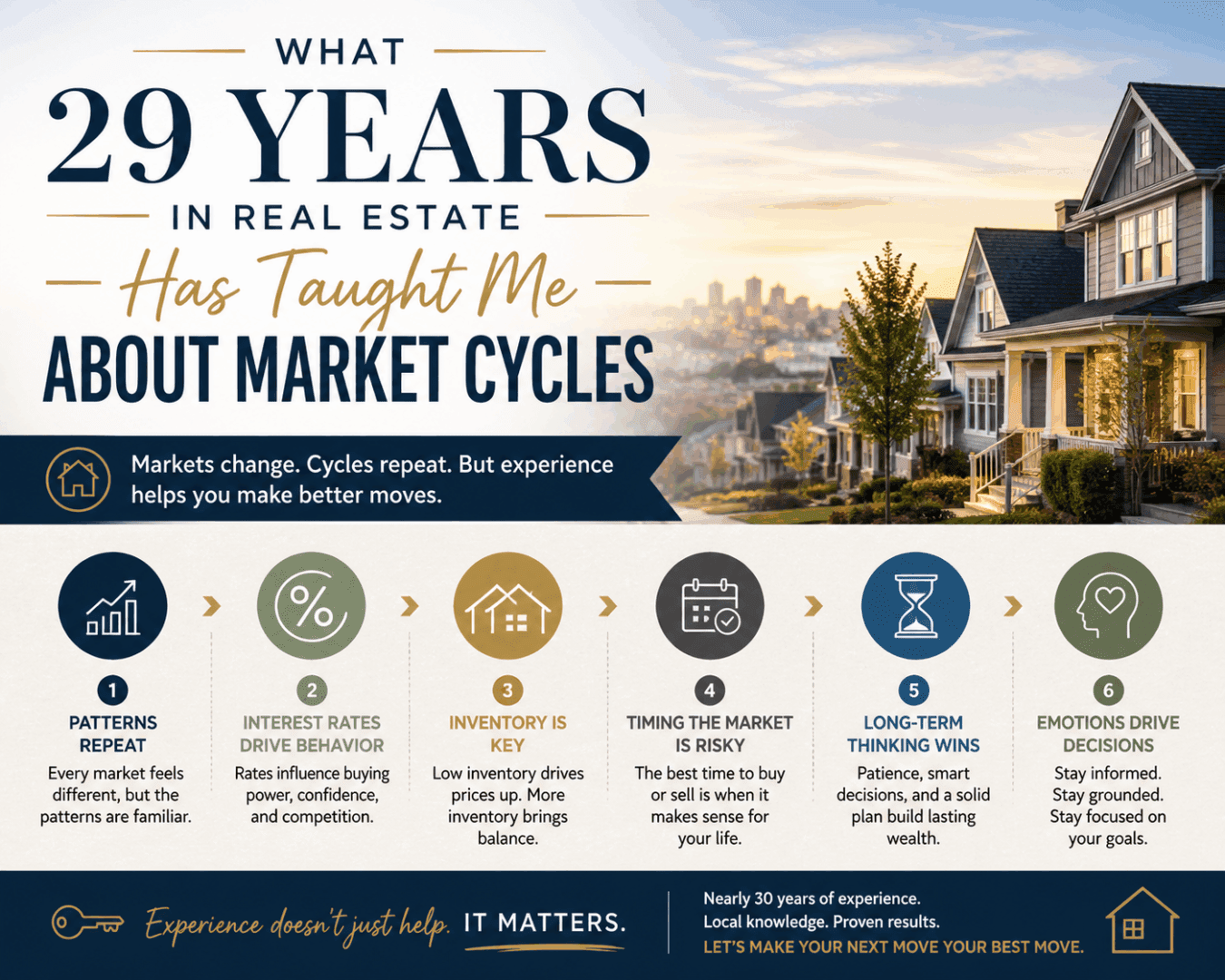
1. Every “Unique” Market Has Familiar Patterns
Every cycle feels different when you’re in it.
People say things like:
- “This time is different.”
- “Prices will never come down.”
- “It’s a terrible time to buy.”
I heard those same phrases in the early 2000s, before the 2008 crash, and again during the rapid rise post-2020.
Here’s the truth: while the causes may differ—interest rates, inventory shortages, economic shifts—the behavior is often the same. Markets heat up, affordability tightens, demand cools, and balance eventually returns.
2. Interest Rates Change Behavior More Than Prices
One of the biggest misconceptions I see is that home prices are the main driver of the market. In reality, interest rates often have a bigger psychological and financial impact.
When rates are low:
- Buyers stretch their budgets
- Competition increases
- Prices rise quickly
When rates climb:
- Buyers pause or reduce budgets
- Homes take longer to sell
- Sellers need to adjust expectations
But here’s what many miss: prices don’t always crash when rates rise—they often stabilize or adjust gradually. Real estate tends to move slower than headlines suggest.
3. Inventory Is the Real Pressure Point
In my experience, inventory (the number of homes for sale) is one of the most important—and overlooked—factors.
- Low inventory creates competition and drives prices up
- High inventory gives buyers leverage and slows the market
Right now, many markets are still dealing with limited inventory, which is why prices haven’t dropped as dramatically as some expected.
4. Timing the Market Is a Risky Strategy
I’ve worked with clients who waited years for “the perfect time” to buy. Some eventually paid more. Others missed opportunities entirely.
The same goes for sellers who tried to chase the peak.
The reality is:
- You don’t buy or sell in a vacuum
- Your decision should align with your life, not just the market
The best time to make a move is when it makes sense for your financial situation, your goals, and your timeline.
5. Long-Term Thinking Always Wins
The clients who’ve done best over the years aren’t the ones who timed things perfectly—they’re the ones who:
- Bought within their means
- Held onto their property
- Made decisions based on long-term goals
Real estate has historically rewarded patience.
6. Emotions Drive More Decisions Than Data
This might be the biggest lesson of all.
Fear and urgency often take over:
- Buyers rush in when prices are rising
- Buyers freeze when rates increase
- Sellers overprice in hot markets
- Sellers hesitate in shifting markets
The clients who succeed are the ones who stay grounded and make informed, not emotional, decisions.
Final Thoughts
After 29 years, I can tell you this: the market will change—again and again. That’s not something to fear; it’s something to understand.
If you focus on fundamentals, stay realistic about your goals, and work with someone who’s seen multiple cycles firsthand, you’ll be in a much stronger position—no matter what the headlines say.
Because in real estate, experience doesn’t just help—it matters.
Sue Monroe