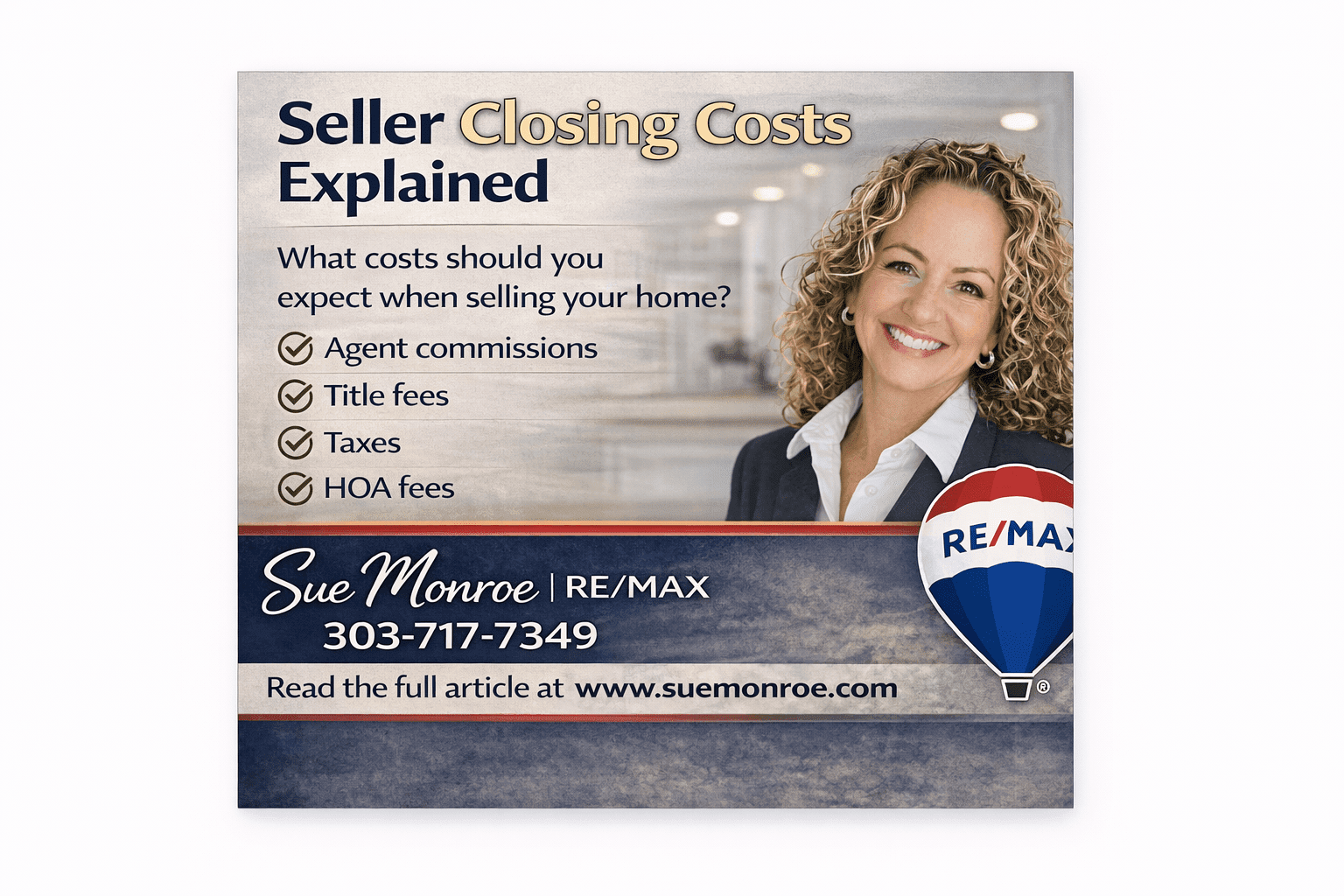
What Are Typical Closing Costs When Selling a Home?
If you’re thinking about selling your home, you may be wondering what costs come with the sale. Many homeowners are surprised to learn that there are several closing costs sellers typically pay when a home sells.
Understanding these costs ahead of time can help you plan financially and avoid surprises at the closing table.
As a real estate professional with over 29 years of experience, I always make sure my clients understand what to expect before they list their home.
Here are the most common closing costs sellers pay.
1. Real Estate Commission
One of the largest costs when selling a home is the real estate commission. This fee is typically paid by the seller and covers the services of both the listing agent and the buyer’s agent.
The commission compensates agents for marketing the home, negotiating offers, managing paperwork, coordinating inspections, and guiding the transaction through closing.
While commission rates can vary, sellers should factor this cost into their overall net proceeds from the sale.
2. Title Insurance (Owner’s Policy)
In many transactions, the seller pays for the owner’s title insurance policy. This protects the buyer from any potential title issues, such as liens or ownership disputes.
Title insurance ensures that the buyer receives clear ownership of the property.
3. Title and Escrow Fees
Title companies or closing companies handle the legal transfer of the property. These fees cover services such as:
-
Processing documents
-
Handling escrow funds
-
Recording the new deed
-
Managing the closing process
These costs are typically split between the buyer and seller depending on the local market and contract terms.
4. Prorated Property Taxes
At closing, property taxes are prorated between the buyer and seller. This means the seller pays taxes for the portion of the year they owned the home.
If taxes are already paid, the seller may receive a credit.
5. HOA Fees and Transfer Fees
If the home is located in a neighborhood with a Homeowners Association (HOA), there may be additional fees at closing, including:
-
HOA transfer fees
-
Document preparation fees
-
Outstanding HOA dues
6. Repairs or Seller Concessions
Sometimes sellers agree to repair requests or closing cost concessions during negotiations.
These can include:
-
Roof repairs
-
Appliance replacement
-
Closing cost credits to the buyer
Not every sale includes these costs, but they are common in many transactions.
7. Mortgage Payoff
If you still have a mortgage on your home, the loan must be paid off at closing. The payoff amount includes the remaining loan balance plus any interest owed up to the closing date.
How Much Are Seller Closing Costs?
On average, sellers can expect closing costs to range from 6% to 10% of the home’s sale price, depending on commissions, taxes, and other expenses.
The good news is that your real estate agent can help estimate your net proceeds before you list your home so you know exactly what to expect.
Thinking About Selling Your Home?
If you’re considering selling your home and would like to know how much you could walk away with after closing costs, I would be happy to help.
With over 29 years of experience in real estate, I guide my clients through every step of the selling process so there are no surprises.
Sue Monroe
RE/MAX
303-717-7349