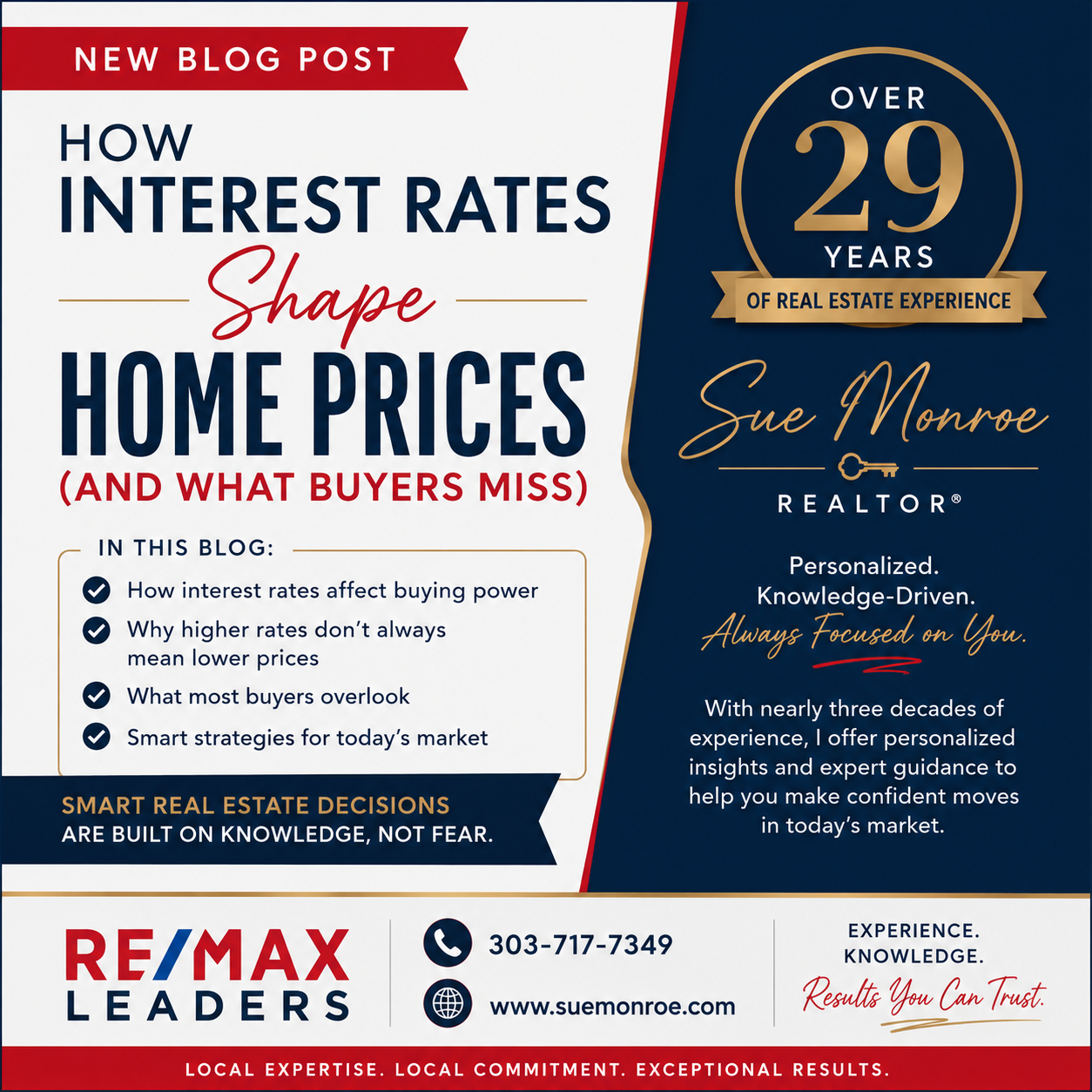
How Interest Rates Shape Home Prices (And What Buyers Miss)
When interest rates change, the housing market changes too.
After 29 years in real estate, I’ve seen buyers react emotionally every time rates rise or fall. Some rush to buy, while others decide to “wait things out.”
But what many buyers miss is this:
Interest rates affect far more than just monthly payments—they influence buyer demand, home prices, competition, affordability, and overall market behavior.
Understanding how rates shape the market can help buyers make smarter, more confident decisions.
Interest Rates Affect Buying Power
One of the biggest impacts of rising interest rates is reduced buying power.
As rates increase:
- Monthly mortgage payments rise
- Buyers may qualify for less
- Affordability becomes tighter
- Some buyers pause their search altogether
For example, even a small rate increase can significantly change a monthly payment over the life of a loan.
That means a buyer who qualified for a certain price range a year ago may need to adjust expectations today.
Higher Rates Don’t Always Mean Lower Prices
One of the biggest misconceptions buyers have is believing that rising rates automatically cause home prices to crash.
Real estate is rarely that simple.
While higher rates can reduce demand and slow price growth, home prices are also heavily influenced by:
- Inventory levels
- Local demand
- Job growth
- Population trends
- Seller activity
- Overall economic conditions
In many markets, limited inventory continues supporting home values even when interest rates rise.
Lower Rates Often Increase Competition
When rates drop, buyers typically gain more purchasing power.
That sounds great—but there’s another side to it.
Lower rates often lead to:
- More buyers entering the market
- Increased competition
- Multiple offer situations
- Faster home sales
- Rising home prices
In extremely competitive markets, buyers may end up paying far more for the home itself, even if the interest rate is lower.
Buyers Often Focus Only on the Rate
Many buyers become so focused on chasing the “perfect” interest rate that they overlook the bigger picture.
The right time to buy depends on more than rates alone.
Buyers should also consider:
- Personal financial stability
- Long-term plans
- Monthly affordability
- Available inventory
- Lifestyle needs
- Negotiating opportunities
Sometimes buyers can negotiate better pricing or seller concessions in a higher-rate market with less competition.
The Market Is Always Adjusting
Real estate markets constantly adapt to changing interest rates.
When rates rise:
- Buyers become more cautious
- Sellers may need to price more strategically
- Homes may stay on the market longer
When rates fall:
- Buyer demand usually increases quickly
- Competition intensifies
- Pricing pressure returns
This is why understanding market conditions—not just headlines—is so important.
Waiting Isn’t Always the Best Strategy
Over the years, I’ve worked with many buyers who waited for rates to drop before purchasing a home.
In some cases:
- Home prices increased instead
- Competition became stronger
- Buyers lost negotiating power
- Monthly payments stayed similar despite lower rates because prices rose
The reality is there’s rarely a “perfect” market with:
- Low rates
- Low prices
- High inventory
- No competition
That combination simply doesn’t last long.
Focus on Long-Term Goals
Interest rates matter—but they are only one part of the equation.
The most successful buyers are usually the ones who focus on:
- Buying within their budget
- Choosing the right home for their needs
- Thinking long term
- Building equity over time
And remember: interest rates can change in the future. Homeowners may have opportunities to refinance if rates improve later on.
Final Thoughts
Interest rates play a major role in shaping the housing market, but they don’t tell the entire story.
After nearly three decades in real estate, one thing remains true: buyers who understand the bigger picture tend to make better long-term decisions.
The key isn’t trying to perfectly time the market—it’s making informed decisions based on your goals, finances, and future plans.
Because smart real estate decisions are built on strategy, not fear.
Sue Monroe