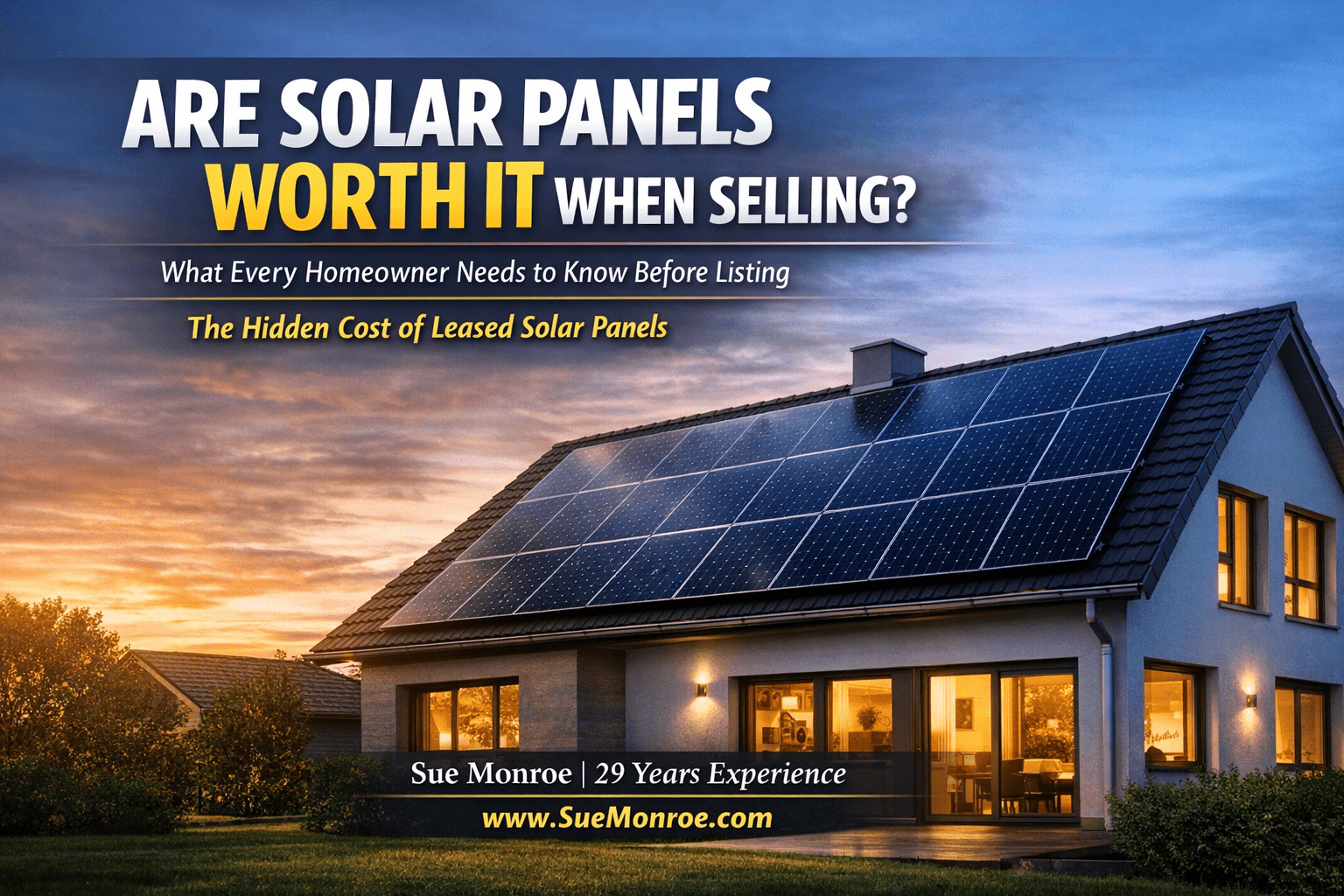
Are Solar Panels a Worthwhile Investment When Selling Your Home?
Solar panels sound like a no-brainer.
Lower utility bills.
Eco-friendly living.
Energy independence.
But here’s what many homeowners don’t realize:
Solar panels can complicate your home sale — especially if they’re leased.
After 29 years in real estate, I’ve seen this scenario play out more times than you’d expect.
Let’s break it down.
Solar Panels: Owned vs. Leased — It Matters
There’s a big difference between:
-
Owning your solar panels outright
-
Financing them with a loan
-
Leasing them from a solar company
If the panels are owned and paid off, they can absolutely add value and appeal.
But if they’re leased or financed, that’s where things get complicated.
The Part Sellers Don’t Realize
If you sell your home and your solar panels are leased:
The lease does not disappear.
The solar company must approve the transfer.
The buyer must qualify to assume the lease.
And here’s the issue:
Most buyers:
-
Don’t want another monthly payment
-
May not qualify for the additional debt
-
Don’t want the extra paperwork
-
Don’t understand the terms of the lease
If the buyer does not qualify or refuses to assume the lease, you as the seller may need to:
Pay off the entire remaining balance at closing.
That can mean thousands — sometimes tens of thousands — of dollars.
Do Solar Panels Increase Home Value?
It depends.
Studies from places like National Renewable Energy Laboratory show that owned solar systems can increase value.
But leased systems?
That’s a different story.
In many cases, buyers view leased solar as:
-
A liability, not an asset
-
An added financial obligation
-
A complication during underwriting
And when buyers have options, they often choose the home without the extra contract attached.
What Sellers Should Consider Before Installing Solar
Before signing a solar lease, ask:
-
How long is the contract?
-
Is there an escalator clause increasing payments yearly?
-
What is the payoff amount?
-
How is the transfer handled?
-
Will buyers need separate credit approval?
Because here’s the truth:
You might plan to stay in your home for 20 years —
but life doesn’t always follow the plan.
When Solar Panels Are Worth It
Solar can absolutely make sense if:
-
You plan to stay long term
-
You purchase the system outright
-
You understand the resale implications
-
The numbers truly make financial sense
But if you may sell in the next 5–7 years, you should talk to a real estate professional first.
Bottom Line
Solar panels are not automatically a bad investment.
But leased solar panels can make your home harder to sell.
Before you install — or before you list — make sure you understand how it impacts your resale.
With 29 years of experience helping sellers navigate these exact situations, I can help you evaluate whether solar will help or hurt your bottom line.
Thinking about selling?
Let’s talk strategy before you make a costly mistake.
Contact Sue Monroe
Visit www.SueMonroe.com to read more real estate insights and get expert guidance.