I Received an Offer on My Home, But I Don’t Like It. What Can I Do?
After your home has been on the market, you’ve prepared it for showings, and buyers have finally started coming through the door, receiving an offer should be exciting. But what happens when that offer isn’t what you were hoping for?
As a Realtor with more than 29 years of experience, I’ve seen many sellers become discouraged when the first offer comes in lower than expected. The good news is that receiving an offer doesn’t mean you have to accept it as-is.
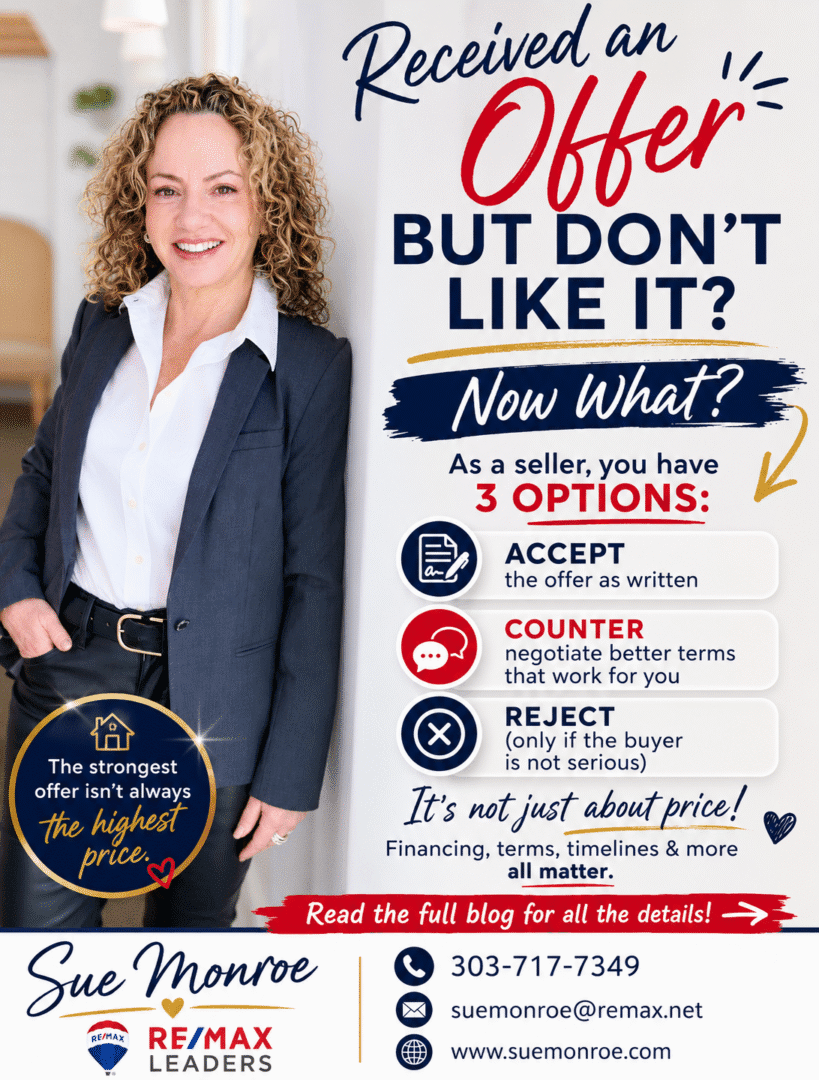
In most cases, sellers have three options:
1. Accept the Offer as Written
If the offer meets your goals and you’re comfortable with the price and terms, you can simply sign the offer and move forward toward closing.
While everyone hopes to receive a full-price offer, sometimes the strongest offer is the one that’s already in front of you. Market conditions, financing, and timing all play a role in determining whether an offer is worth accepting.
2. Counter the Offer
This is the option I recommend most often.
A buyer who has taken the time to view your home, work with an agent, obtain financing, and submit an offer is usually serious about purchasing your property. Many buyers simply start below asking price to see if there is room for negotiation.
After all, it never hurts to ask, right?
Rather than rejecting an offer outright, consider making a counteroffer. You can negotiate the purchase price, closing date, inspection terms, possession date, or other aspects of the contract that are important to you.
Remember, real estate is a negotiation. The first offer is often just the starting point.
3. Reject the Offer
A seller always has the right to reject an offer completely.
However, I rarely recommend rejecting an offer unless there are concerns about the buyer’s ability to perform, the offer is clearly unrealistic, or the buyer doesn’t appear serious about moving forward.
One thing sellers should remember is that once you reject an offer, the buyer may move on to another property. You may never get a second chance to negotiate with them.
That’s why it’s often better to keep the conversation going through a counteroffer rather than ending negotiations immediately.
Price Isn’t Everything
One of the biggest mistakes sellers make is focusing only on the purchase price.
A higher-priced offer isn’t always the best offer.
Here are some other factors that deserve careful consideration:
Financing
Is the buyer paying cash or obtaining a mortgage? Has the buyer been pre-approved by a reputable lender?
Earnest Money Deposit
A larger earnest money deposit can demonstrate that a buyer is committed to the transaction.
Inspection Requests
Some buyers ask for extensive inspections or repairs, while others may be more flexible.
Appraisal Gap Coverage
In certain situations, buyers may agree to cover a portion of any appraisal shortfall.
Closing Date
A closing timeline that matches your needs can be just as valuable as a slightly higher offer.
Possession Terms
Do you need extra time after closing to move? Some buyers may be willing to offer a rent-back or flexible possession date.
Contingencies
Fewer contingencies can make an offer more attractive and reduce the chances of the transaction falling apart.
The Bottom Line
Receiving an offer you don’t love doesn’t mean the deal is dead.
In many cases, a successful real estate transaction begins with a buyer making an offer below asking price and a seller responding with a thoughtful counteroffer. The goal is to find common ground that works for both parties.
Before making a decision, take time to review all aspects of the offer—not just the price. The strongest offer is often the one that provides the best overall combination of price, terms, and certainty of closing.
If you’re thinking about selling your home and would like guidance on evaluating offers, I’d be happy to help.
Sue Monroe
RE/MAX Leaders
303-717-7349
suemonroe@remax.net
www.suemonroe.com