
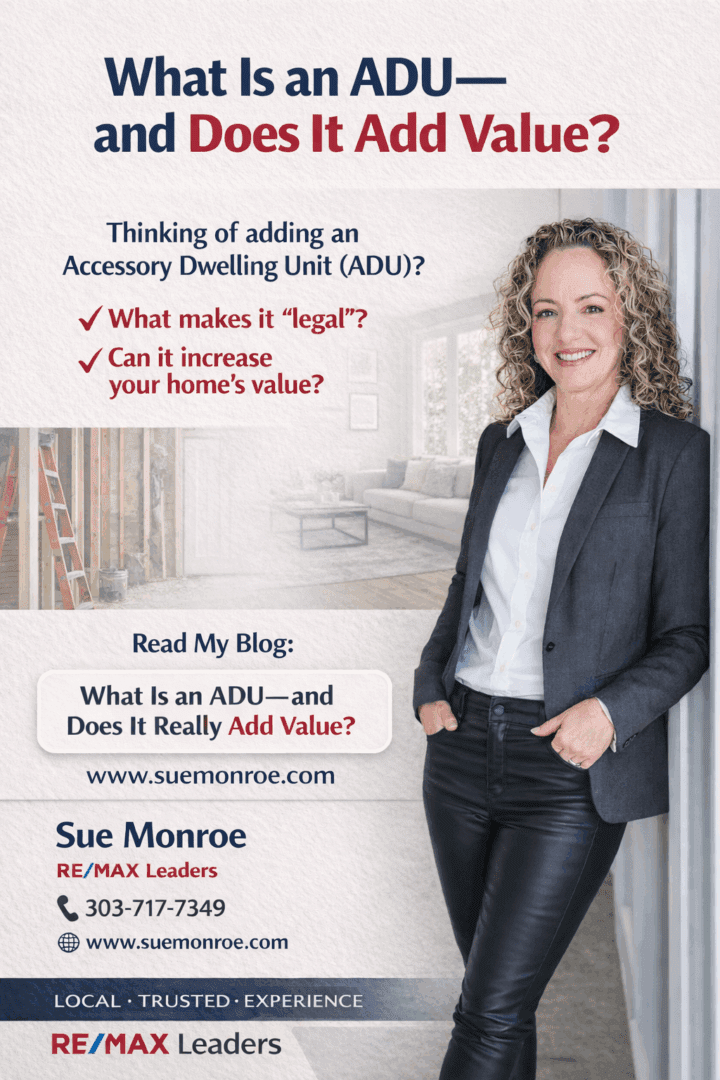
What Is an ADU—and Does It Really Add Value?
You may have heard the term ADU more and more lately—but what exactly is it, and is it worth it?
As a real estate agent with over 29 years of experience, I get this question all the time.
What Is an ADU?
ADU stands for Accessory Dwelling Unit.
Simply put, it’s a secondary living space on a property that has:
- Its own entrance
- A kitchen
- A bathroom
- A sleeping area
Common types of ADUs include:
- Basement apartments
- Garage conversions
- Detached guest houses
It’s not just extra space—it’s a fully functional living unit.
What Does It Take to Be a “Legal” ADU?
This is where many homeowners get tripped up.
To be considered an official ADU, it must:
- Meet local zoning and building codes
- Be properly permitted with the city
- Have separate living facilities (kitchen, bath, entrance)
- Pass inspections for safety and habitability
If it’s not permitted, it may just be considered “non-conforming space”—which can affect value and financing.
Does an ADU Add Value?
In many cases—yes, it absolutely can.
Here’s why buyers love them:
- Rental income potential
- Multi-generational living (parents, adult children)
- Private guest space
- Flexibility for home offices or future needs
But here’s the key:
Not all ADUs add the same value.
Value depends on:
- Whether it’s legally permitted
- Quality of construction and design
- Location and demand in your market
- Size and functionality
My Advice After 29+ Years
Before you build an ADU—or buy a home with one—it’s important to understand:
- What your city allows
- What buyers in your area actually want
- Whether the investment makes financial sense
I’ve seen homeowners spend a lot building an ADU that didn’t add nearly as much value as they expected—and others where it made a huge difference.
If you’re considering adding an ADU or buying a home with one, I’m happy to help you evaluate your options.
Sue Monroe
RE/MAX Leaders
303-717-7349
www.suemonroe.com